
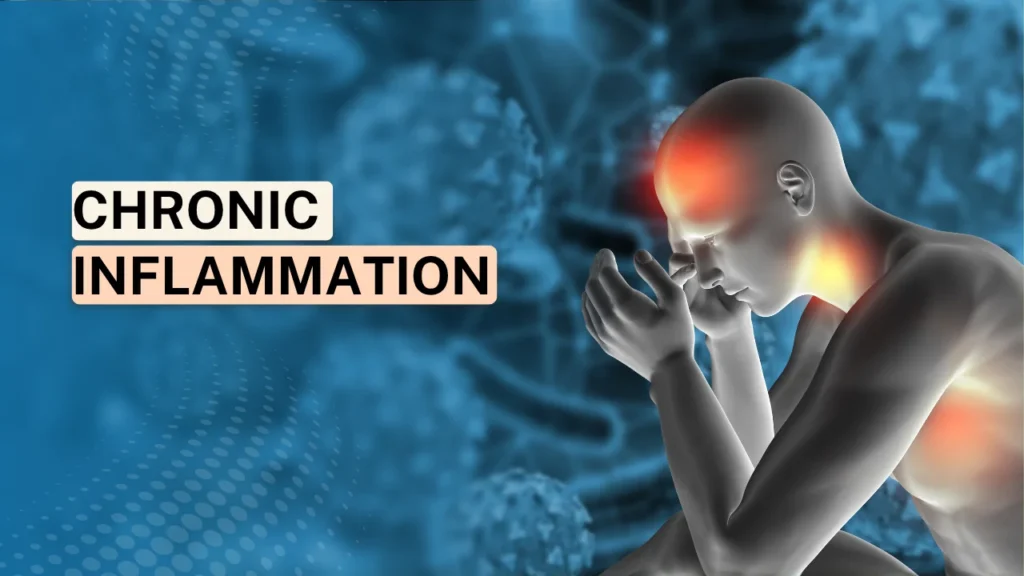
Chronic inflammation silently impacts millions of Indians.
Let’s understand it and the most effective dietary strategies to combat it.
What is Chronic Inflammation?
We all know about inflammation—like redness and swelling after an injury or infection. That’s short-term, or acute inflammation. But what if your body’s defense never turns off?
Chronic inflammation is a low-grade, ongoing state that quietly damages tissues for months or even years. It operates below the radar, showing few obvious symptoms but causing long- term health complications.
It could arise from a lack of anti-inflammatory compounds in the body, rather than just an excess of inflammatory compounds. This points to the need for balancing inflammation with strategies that turn it off or tone it down.
Effects of Chronic Inflammation
Recent studies from 2024 and 2025 reveal it underlies many of today’s major diseases—especially in India. Here’s how it impacts health:
- Heart disease: Directly linked to heart attacks and strokes.
- Diabetes: Inflammation disrupts insulin signalling, raising blood sugar and diabetes risk.
- Cancer: Can lead to colorectal, lung, and ovarian cancers.
- Autoimmune & joint problems: Makes conditions like arthritis and fibromyalgia worse.
- Brain health: Speeds up diseases like Alzheimer’s and can affect mood or memory.
- Digestive issues: Conditions like inflammatory bowel disease start with inflammation.
- Aging: Chronic, low-grade inflammation accelerates aging—known as inflammaging.
The bottom line? It is like rust—slowly, invisibly wearing away the foundations of our health. That’s not all! Disease itself can accelerate inflammation turning this into a vicious cycle.
What triggers inflammation?
- Diet: Food is a major culprit. Studies link ultra processed food and refined sugars to inflammation. But in a high carb state, overall daily glucose exposure coming from grains, fruits and starchy vegetables like potatoes cause higher insulin levels, leading to inflammation even if you are not overweight. After digestion, the body treats all carbohydrates like a SUGAR.
- Obesity: Body fat, particularly visceral fat, secretes inflammatory chemicals, while sitting for hours promotes low-grade inflammation.
- Environmental toxins: Pollution from all sources, smoking, toxic cookware, and higher exposure to chemicals—activate long-term inflammatory processes.
- Persistent infection: We’re living in a high germ exposure era now and our bodies are exposed to far more pathogens compared to previous times. This leads to higher rates of infection and poorer coping mechanism by the human body. This can even turn on some autoimmune reactions in the body.
- Stress and poor sleep: Chronic mental stress and interrupted sleep boost inflammatory molecules, worsening all physical diseases.
- Gut health: An imbalance in healthy gut bacteria drives inflammation by weakening the gut barrier.
Can the diet help?
- Eat anti-inflammatory foods: Vegetables, high-quality proteins, healthy fats, and Indian spices all help reduce inflammation.
- Add specific nutrients: Omega-3s, vitamins (C,E), and minerals (zinc, selenium) support your body’s healing.
- Cut down on processed carbs and trans fats—they worsen inflammation.
- Take care of your gut: Fiber, curd, and fermented foods help restore balance.
As a dietitian, my aim is the food-first strategy, followed by supplements.
I do recommend supplements as all our needs may not be met through food. The demand is higher, food quality is getting poorer.
The Ketogenic Diet: Indian Experiences and Modern Science
So, what about the ketogenic diet? Is it just another food fad, or can it really help Indians manage chronic inflammation?
A recent study from Central India in 2024 showed that just eight weeks on a ketogenic diet lowered key inflammation markers in healthy adult:
- CRP levels dropped by 0.8 mg/L
- IL-6 by 0.9 pg/mL
- TNF-alpha by 1.3 pg/mL
- Fecal calprotectin (a marker of gut inflammation) declined by ~15%
By reducing carbs, the body burns fat and produces ketones.
These ketones actively suppress inflammation. It also reduces overall glucose and insulin exposure, preventing fatty liver, insulin resistance and diabetes which is a growing problem in India.
While it offers strong potential for managing chronic inflammation, it must be customised to match Indian dietary habits and supervised by professionals.
Traditional Indian foods—such as ghee, coconut, paneer, nuts, seeds and their flours, curd, vegetables, spices, can fit well into KD when balanced appropriately.
A range of healthy keto friendly products are also available at affordable prices tin the Indian market.
I have been following it since almost decades now, despite having Mangalorean roots!
Takeaway:
Get your blood checked from time to time to identify inflammation early on. Rethink your plate: fewer carbs. Consider a supervised ketogenic diet specially if you have a medical condition. Prioritise movement and sleep. Chronic inflammation is a silent force behind many diseases in India, but simple, science- based dietary changes—especially with approaches like the ketogenic diet—are powerful tools for prevention and healing. https://www.mdpi.com/3467390