
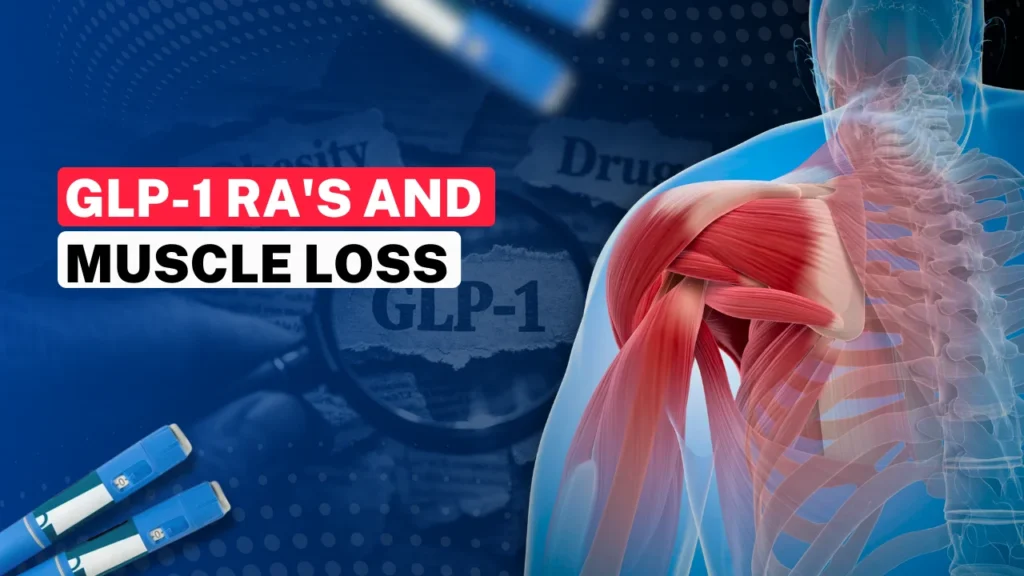
GLP-1 medications like semaglutide and tirzepatide have transformed the landscape of weight loss. They reduce appetite, improve blood sugar, and help people shed pounds faster than we’ve ever seen before.
But there is a critical question——What kind of weight are we losing?
Successful treatment isn’t just about a smaller number on the scale. It’s about losing fat while fighting to keep every ounce of muscle. That is what we call \”Quality Weight Loss”, structured nutrition and exercise is the only way to achieve it.
What happens when you take the drug?
GLP-1 receptor agonists work by turning down the volume on hunger, and improving insulin signalling. Naturally as hunger dies, you eat less and weight loss follows.
Research consistently shows that during medication-assisted weight loss, 20 to 40% of the weight lost can be lean body mass. To clarify further, lean mass includes body water including blood, fluids inside and outside your cells, organs, bone and muscle. Of these, muscle and water can be lost easily. While studies analysing lean mass losses on these drugs do not account for absolute muscle loss. However, when you lose weight rapidly, especially if you aren\’t eating enough protein or lifting weights, your body does not discriminate. It sheds whatever tissue consumes the most energy.
Muscle is expensive tissue!
Why does this matter?
Because skeletal muscle isn\’t just for aesthetics.
- It regulates glucose uptake.
- It maintains your metabolic rate.
- It is your primary protection against insulin resistance.
If you lose muscle, you might get smaller, but your metabolism crashes. This is one of the reasons why people regain the weight quickly when they stop the drug.
How do we actually protect muscle?
The answer is Resistance Training & Optimal Protein Intake.
You cannot \”drug\” your way to muscle maintenance. Muscle is preserved by mechanical tension. You have to give your body a reason to keep it.
Multiple studies confirm that combining calorie restriction, high protein, and resistance training prevents muscle loss significantly better than calorie restriction alone.The Practical Guidelines: If you are on GLP-1s, you don\’t need to live in the gym, but you need a plan:
- Frequency: 2–4 sessions per week.
- Intensity: Moderate to high. The last 2–3 reps must feel challenging. If it’s easy, it’s not signalling growth.
- Volume: 6–12 working sets per muscle group per week.
And remember: Progressive Overload still applies. A common mistake is thinking, \”I just want to maintain, so I\’ll lift the same light weights forever.\” No. Your body adapts downward. To keep what you have while in a deficit, you need to challenge the muscle by slightly increasing weights, repetitions, or control over time.
What about Cardio?
Excessive high-intensity cardio combined with eating less can increase muscle loss risk. Instead, prioritise Zone 2 Cardio—walking, cycling, or steady-state movement where you can still hold a conversation. This supports fat oxidation without placing huge recovery demands on your body.
But the secret weapon is NEAT (Non-Exercise Activity Thermogenesis). GLP-1s can make you feel lethargic. You might subconsciously stop taking the elevator, or sit more. This drop in daily movement can lower your calorie burn by hundreds of calories. You have to be intentional. Track your steps. Don\’t let the medication make you sedentary.
Protein
One of the biggest risks on GLP-1s is Protein Malnutrition: Because if you lose appetite, it is difficult to eat protein.
During weight loss, especially if carbohydrates are high and protein is low, your body actually breaks down muscle faster.
To counteract this, your protein needs actually go up, not down.
For individuals on GLP-1s, the evidence-based target is 1.6 to 2.2 grams of protein per kg of your target body weight.
You can start slow with 10-20g protein 3–4 meals, if you haven’t been eating enough protein so far. Focus on quality sources: Eggs, dairy or paneer, fish, lean meats, and soy. And if your appetite is really low, use a high-quality whey or plant protein shake. Think of it as metabolic insurance.
A common pitfall I see? Eating way too less with high-volume training. This is a recipe for disaster. Ketogenic or low carb diets preserve muscle while burning fat.
Look beyond the scale. The scale cannot distinguish between losing 5lbs of fat vs. 5lbs of muscle.
Track these instead:
- Strength: Are you getting stronger in the gym?
- Measurements: Is your waist shrinking?
- Body Composition measurements: Use a DEXA scan if available.
And if you hit a plateau or lost all your appetite, try correcting these:
-Look at your protein intake,
-Check your daily steps, -Reassess your training intensity, and
-Inform your doctor if you’re unable to eat.
Takeaway:
Muscle loss isn\’t an inevitable side effect of the drug—it is usually a programming error.
GLP-1 medications are powerful tools but they work best when combined with low-carb nutrition, resistance training, adequate protein and recovery. Losing fat while preserving the strength and health you need for the rest of your life is SUCCESSFUL TREATMENT.
Consult an expert if you’re stuck!