
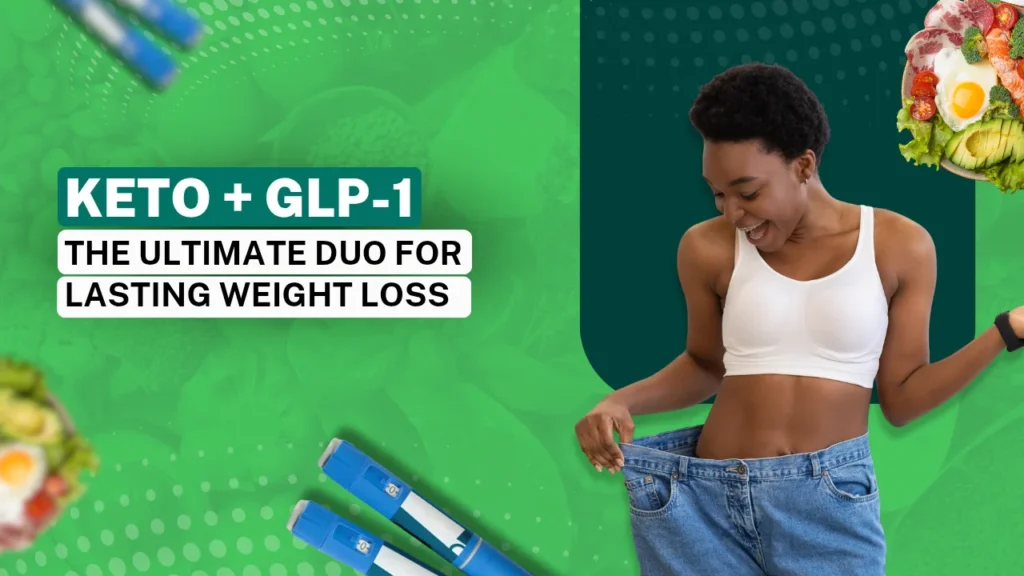
Right now, in India, weight is dropping faster than health is improving.
Ozempic. Mounjaro.The scale is going down — yes.
But I am seeing something extremely worrying in my clinic. People are getting weaker, not healthier. Slimmer, but more insulin resistant. Thinner outside… sicker inside.
What actually happens on GLP-1 medications
These drugs:
- Suppress appetite
- Slow the rate at which food passes through the stomach
So that is not fat loss by default. That is reduced intake.
And here’s what I see repeatedly:
People eat very little and when they eat, it’s mostly carbohydrates.
Feels like “Light Food” but disastrous if you’re chasing fat loss.
When trying to lose fat, just looking at glucose spikes is not enough. The total net carbohydrates per day matter.
The Ideal Diet
Synergistic Effects
GLP-1 agonists promote weight loss by mimicking the gut hormone GLP-1, which slows gastric emptying, boosts insulin release, and signals fullness to the brain via receptors in the hypothalamus.
Meanwhile, ketogenic (keto) and low-carb diets shift the body to burn fat for fuel, inducing ketosis where ketones like beta-hydroxybutyrate (BHB) rise and naturally curb hunger by suppressing ghrelin, the \”hunger hormone.\”
Together, they create a \”one-two punch\”: GLP-1 provides rapid satiety while low-carb sustains it through stable blood sugar and fat adaptation, leading to greater fat loss without excessive muscle wasting.
A real-world study of 40 obese adults found that combining a very low-calorie ketogenic diet (VLCKD, ~800 kcal/day,<50g carbs) with liraglutide (up to 1.8mg daily) yielded 20.8kg weight loss over 4 months—versus 14.5kg with VLCKD alone—with higher ketosis (BHB 1.0 vs 0.6 mmol/L) and better insulin sensitivity (HOMA-IR drop to 2.0).(1)
Shared Pathways in Appetite Suppression: The Brain Hack
Both strategies converge on brain and gut pathways to tame hunger. GLP-1 acts on the brain centres that inhibit food intake and on the gut by delaying digestion, reducing meal size by 10-20%.
Keto/low-carb diets boost satiety via high-fat/protein meals that trigger similar fullness signals—fats slow emptying like GLP-1, while ketones cross the blood-brain barrier to dampen the hunger hormone ghrelin.
Long-term low-carb with adequate protein may even elevate natural GLP-1 secretion, amplifying drug effects; short-term keto might transiently lower it but still suppresses appetite via other metabolic shifts.
This overlap minimises cravings and weight rebound post-drug discontinuation.
Ideal for Post-Treatment Maintenance
Discontinuing GLP-1 often triggers a reversal of almost all of the weight lost within a year, due to appetite rebound and metabolic adaptation.
Keto/low-carb excels here by mimicking GLP-1\’s effects naturally: sustained ketosis maintains low ghrelin, stable glycemia (HbA1c < diabetes threshold), and fat-burning.
In a study of 308 type 2 diabetes patients on keto (<30-50g carbs/day), those stopping GLP-1 kept >70% at 5%+ loss and >50% at 10%+ after 12 months—matching or exceeding continuous users, with minimal regain ~1kg. (2)
Unlike GLP-1\’s lean mass loss (15-60%), keto preserves muscle due to it’s anti-catabolic effect. For maintenance, transition to moderate low-carb (50-100g/day) post-keto ensures better satiety and metabolic health.
Pair them with resistance training for further muscle retention.
Consult a qualified dietitian who can blend culture with science. Monitoring labs is essential; expert guidance will be ideal.
References
1. Camajani E et al. Very low-calorie ketogenic diet and liraglutide as a synergistic strategy for the treatment of obesity: A short-term, non-randomised, observational, real-world clinical evaluation. Diabetes Obes Metab. 2025 Oct;27(10):6078-6083. PMID: 40734597; PMCID: PMC12409220.
2. McKenzie, A.L., Athinarayanan, S.J. Impact of Glucagon-Like Peptide 1 Agonist Deprescription in Type 2 Diabetes in a Real-World Setting: A Propensity Score Matched Cohort Study. Diabetes Ther 15, 843–853 (2024). https://doi.org/10.1007/s13300-024-01547-0